Deity’s got me rethinking IFB.
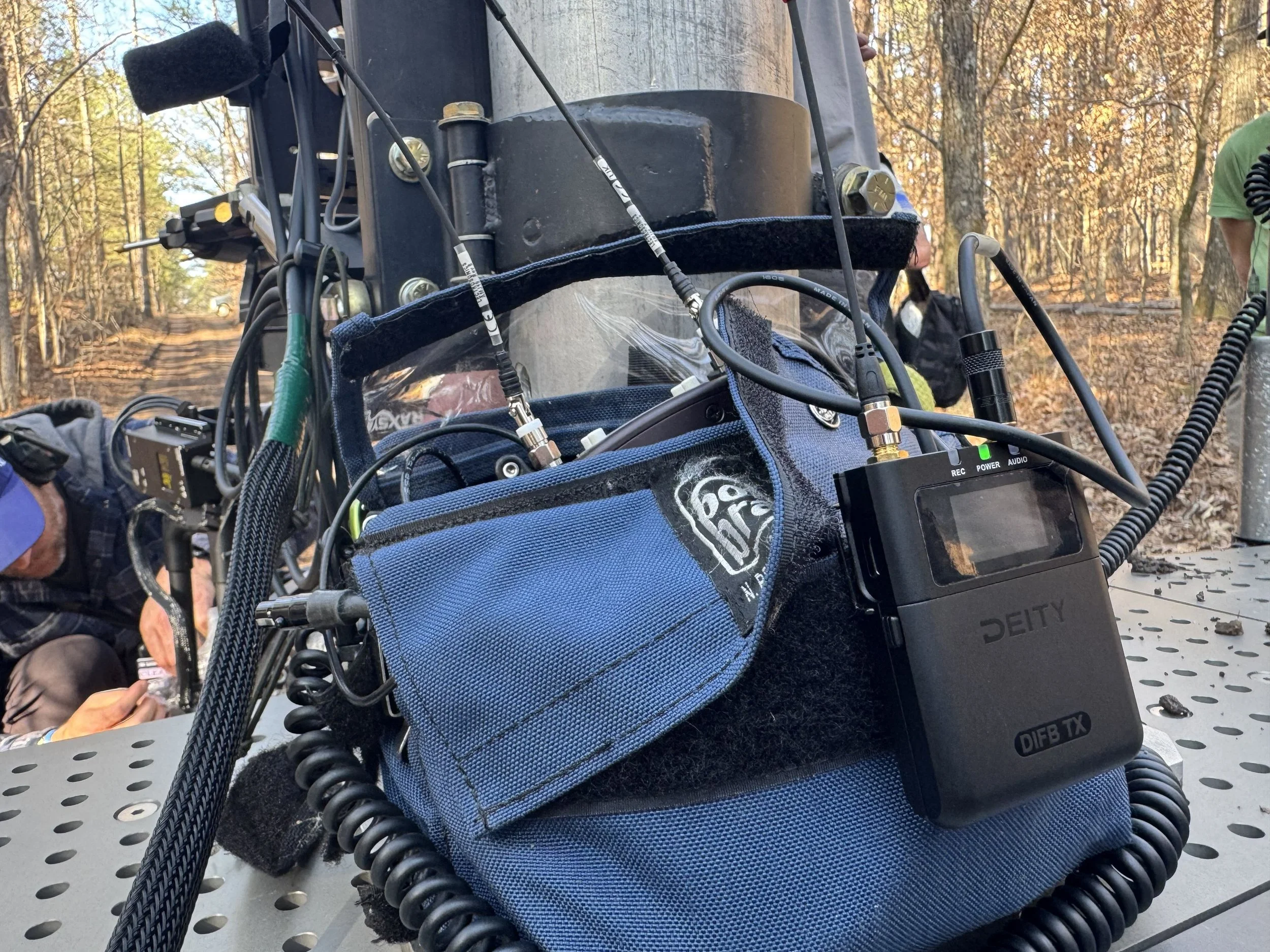
Deity DIFB Hush Transmitter Clipped on to Sound Bag.
A company who needs no Introduction
Since the launch of the V-Mic D3 over a decade ago, Deity has been an intriguing brand to watch. They entered a landscape defined by "old standards" and rigid industry opinions, leaving many to wonder how a newcomer could possibly break into the professional market. I vividly remember attending my first NAB show in 2016 and hearing them announce their first DSLR video microphone. At that time, the "prosumer" audio category was still in its infancy and dominated by legacy brands. However, being an existing fan of there parent company Aputure, I saw the blueprint for their success. Just as Aputure democratized professional lighting for creators, Deity has followed suit—evolving from an ambitious startup focused on low budget creators into a powerhouse for indie film makers who are quickly emerging into the professional audio community.
Why It Matters
Fast forward to today in 2026, and Deity has officially stepped up with the next evolution to their Global one band system the DIFB. And considering that modern IFB systems often double as camera hops and video assist feeds the timing of this launch couldn’t have been better. There hasn’t been many new options in the IFB world for us sound mixers outside of the old standards for some time, and even some of the newer premium wireless brands have yet to announce any new systems. What’s happening now could be unprecedented, perhaps we’re finally seeing products come into the professional wireless market that are performing or sometimes outperforming legacy brands as far as range, reliability and robustness? Before we begin it should be known that it comes in two versions: the "Hush" (for the US market) and the International version, which packs a few extra features. One of those additions is Bluetooth headphone connectivity—which, frankly, feels a bit counterintuitive for an IFB since Bluetooth adds latency, but we’ll dive into that in a bit. The International model also boasts backward compatibility with Theos transmitters and has less latency then the US version. However both versions of the DIFB features an impressive tunable ultra-wideband range of 550 MHz to 960 MHz. Cleverly, the DIFB system your phone's GPS to automatically conform the DIFB to local RF regulations depending on which country you’re working in via its well designed and convenient Sidus app.
Real World Set Experience
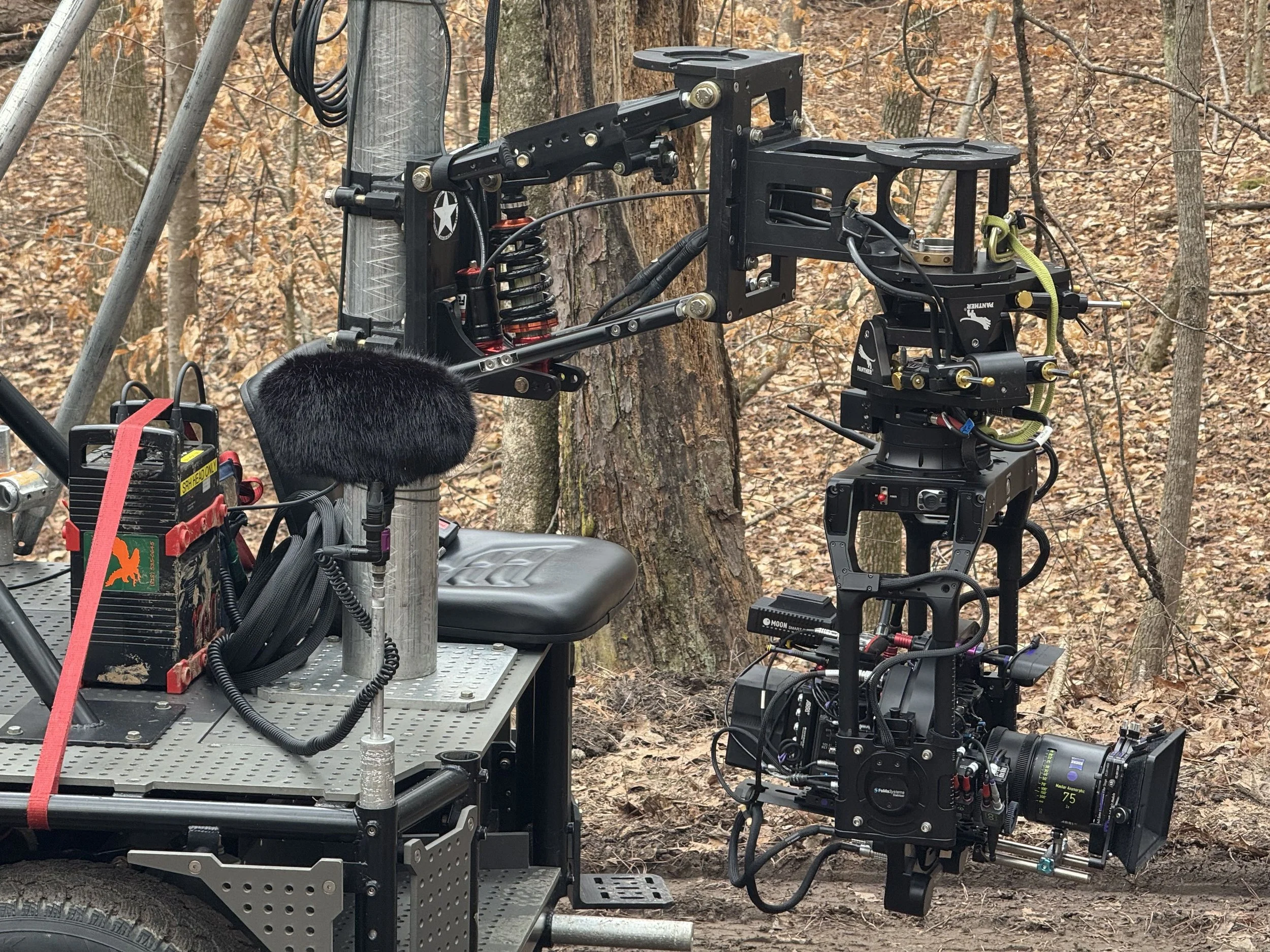
All right let’s get right down to the nitty gritty, and by the way if you’re looking for a spec sheet you can find those on the Deity website—for us here today, we’re going to focus on what actually matters for this review: real-world experience and performance. I just spent three days on a messy, rain-soaked set in the woods putting the DIFB Hush system through the wringer. It got dropped a couple times and I didn’t give it any special treatment. It had one job, be an IFB and perform well with the rest of the pro level gear. Part of the job involved "bag drops" on a Patriot car—a battery-operated tracking vehicle with a remote head for filming high-speed car chases. For this I would monitor those takes with the Deity DIFB. Also, I used a the DIFB system to feed a mix to Atlanta based boom op Hugo Kundert for traditional IFB monitoring for recording dialogue on an exterior set. It’s also worth mentioning that the DIFB system was closely surrounded by known RF killers such as a wireless remote head, high powered Teradek video transmission system. Also in play we’re four Lectrosonics D2 talent wireless & one DPR-A boom. For the mix feed I ran a balanced line-level feed output feed from my mixer into the DIFB transmitter. I started at 20mW on the 615 MHz guard band and then later I also pushed the unit to 100mW in the 550-608 MHz range to see how it handled the Patriot driving down long trails at distances exceeding 300 meters.
RF Range & Robustness
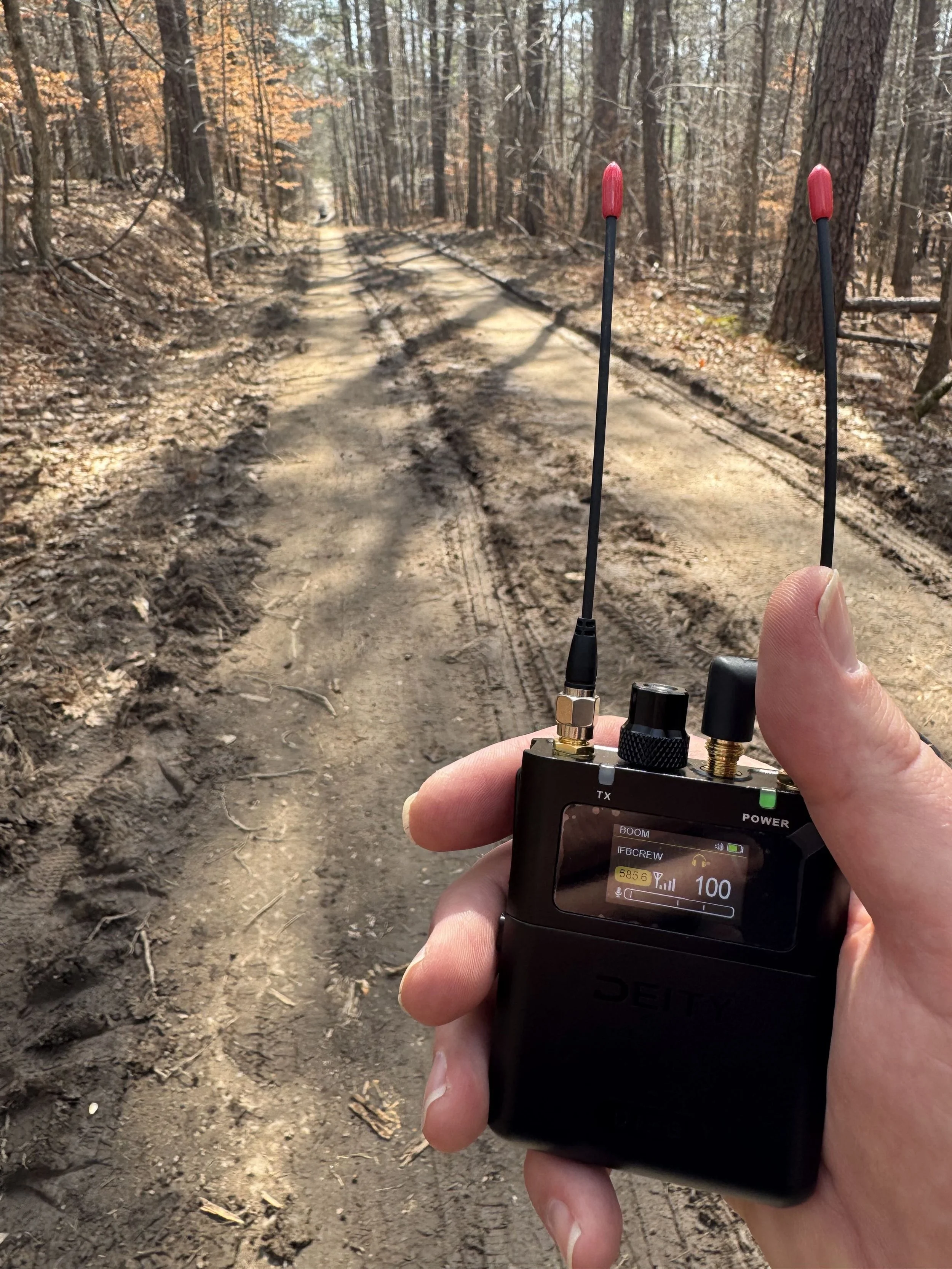
For the patriot work driving shots, the DIFB transmitter in a sound bag would be traveling far down a dirt road. For this kind of work a bag drop is a necessity and you’ll be stationed at the start mark with the focus puller and other crew all struggling for wireless at the end of range. The IFB system proved to be valuable to hear what I was getting with the Sanken CSM1 microphone mounted in a Radius windshield. The patriot vehicle would be traveling in excess of 300 meters at 25 mph. Having an IFB was invaluable as I could hear what was being captured for a bag drop workflow. After getting the unit set up, I initially started at 615 MHz which is valuable RF real estate in the guard band which is usually wide open but has a max power of 20mw due to the FCC limits. I could maintain range for about 100 meters before things began to crackle, although I thought the range was acceptable for any regular film set, it wasn’t gonna work for the patriot work. Next I switched the unit to the 550-608 MHz range so I could run the full 100mw. For the antennas I used the included cut to length 1/4 wave whips on both the transmitter and the diversity receiver which has two antennas. Honestly, once I put it on 100mw I was blown away— it was rock solid for the full 300 meters. I can’t tell you how much of a stress relief it was to maintain signal and monitor effectively. In terms of sheer robustness, it actually outperforms every other digital system I’ve put to the test.
Cons & Needs Improvement
It’s worth noting that I’m running firmware version 1.0, but I found the process for changing frequencies on the transmitter and receiver a bit clunky. It requires more menu diving than I’d like, forcing you to add frequencies to a library file rather than just tuning on the fly. I suspect the design intent leans heavily on presets—which makes sense for the international version where you’re toggling between talent wires—but for a US-based IFB, I just want to dial in a frequency and go. I also couldn't get the Sidus app to sync frequencies across the ecosystem the way you can with Timecode, which felt like a missed opportunity. Even the scanning process on the receivers is a bit unintuitive; it gives you star ratings for channels, but you can’t actually select them from the scan screen—you have to memorize the frequency and manually add it to your library. While I’m sure these workflows will evolve with future firmware updates, the basic act of scanning, programming, and syncing via the hardware or the app needs to be much more streamlined and intuitive. The only other complaint I have is the clip could be a little better as it doesn’t bite into the belt as it should, so if you bend over it’s going to fall off. But pictured below the pocket with the receiver on the inside is a bit more secure.
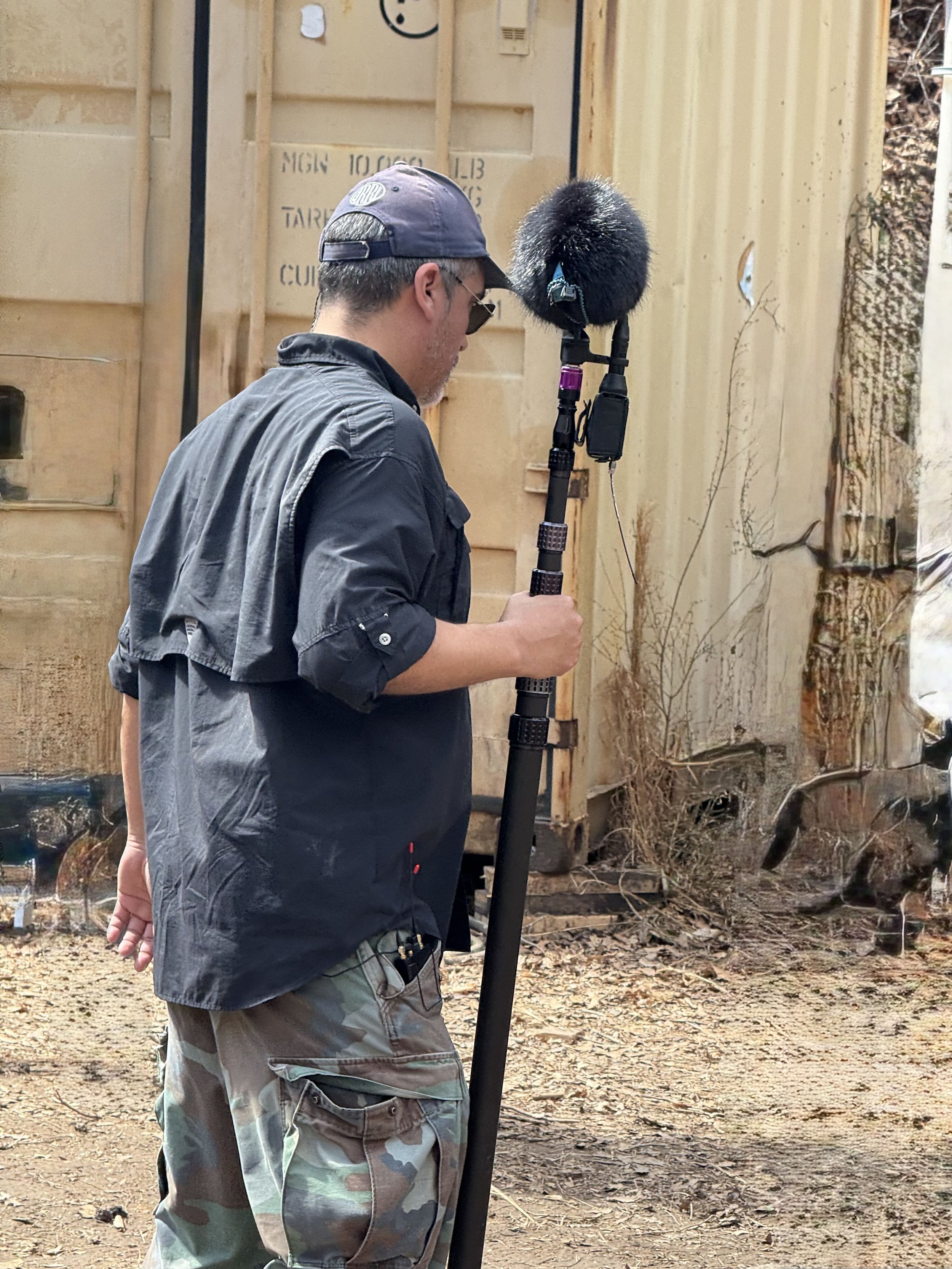
Boom Op Hugo Kundert using the Deity DIFB receiver clipped in his front pocket.
Sound Quality
One of the primary advantages of a digital system is the absence of companding, which is common in older analog counterparts and often leads to a loss of fidelity, hiss, and other audio artifacts. The Deity DIFB is no exception here; the audio quality is excellent and sits well above the performance of a Comtek or lower-end FM wireless system. While I wouldn’t go so far as to say it’s on par with my Lectrosonics digital gear, the difference would be difficult to discern in any standard IFB workflow. What is immediately noticeable is the lack of hiss—the system is incredibly quiet—and the headphone output delivers plenty of volume. The unit does feature built-in voice commands for "eyes-free" channel preset adjustments, but those feel like they are still in early development with the current firmware. I actually recommend turning those features off so you aren’t blasted by the announcer’s voice when your monitoring levels are set high for "low talkers." The frequency range on the DIFB Hush system is very good, but keep in mind that this review covers the Hush transmitter specifically, not the Theos. I can't speak to the Theos quality as I am reviewing the U.S. version of the DIFB.
Is there too much Latency?
When I first set up the bag drop feed from the Patriot car and spoke into the mic while monitoring the DIFB receiver, the latency was immediately noticeable. It’s clear this isn't an IEM for live stage performances that require near-zero lag, but that’s simply not the use case here. In the world of IFB, range and robustness are king. To put the 11ms latency into perspective, at a standard 24fps, a single frame is approximately 41.67ms. This means the delay is only about 1/4 of a frame—well below the threshold where a director, focus puller, or boom op would notice any sync issues with the picture. As long as the person wearing the receiver isn't monitoring their own voice, it’s a non-issue. On my third day, I checked in with my boom op, Hugo Kundert, to see how the dialogue felt while booming; he confirmed it felt completely natural. t’s a smart trade-off: by giving up a few milliseconds "under the hood," Deity has clearly gained massive ground in RF stability and distance. If you’re worried about the lag, don't be—it’s a total non-issue in the field.
Global One Band
The standout feature of this IFB system is its expansive frequency spectrum. Anyone experienced in wireless knows that 'frequency real estate' is a premium commodity, and RF performance—regardless of the bells and whistles—is ultimately dictated by your signal-to-noise ratio. Gaining access to the guard band (614-616 MHz), the duplex gap (653-663 MHz), the ISM band (902-928 MHz), and the Part 74-licensed STL band (941-960 MHz) is a massive win. I’ve intentionally designed my ecosystem to offload non-critical traffic from the UHF TV bands used by my main talent; being able to spread out my RF footprint this way is a genuine game-changer for any workflow. This also puts just the right amount of pressure on competing brands to follow suit. There is no wireless system that should not include this type of feature set in today’s environment IMO, the landscape is just to crowded for anything else moving forward.
Will I be utilizing it in my workflow?
To be honest, not every piece of Deity kit has made it into my daily professional workflow—mostly because I’ve been spoiled by high-end gear with decades of proven track records. However, when it comes to the DIFB Hush system, it really checks all the boxes and I can see it being used in many scenarios for my future work. Also it’s worth mentioning that I have measured the device with spectrum analyzer and all of the RF deviation and power levels are in spec with no spurious emissions and you can find those tests on my YouTube channel @michaelwynnecas and other tutorial videos on the DIFB system. The range and robustness aren't just "as good" as my existing systems; in many cases, they’re actually better. I can easily see myself finding multiple ways to utilize this, and it’s definitely earned a permanent spot in my sound package. Overall, I’m really happy with the system. I’m looking forward to seeing how the DIFB evolves through future firmware updates—hopefully resolving a few of my UI annoyances—and I’m excited about what looks like a very bright future for Deity in the world of professional film set wireless.