The RF tool that nobody told you about
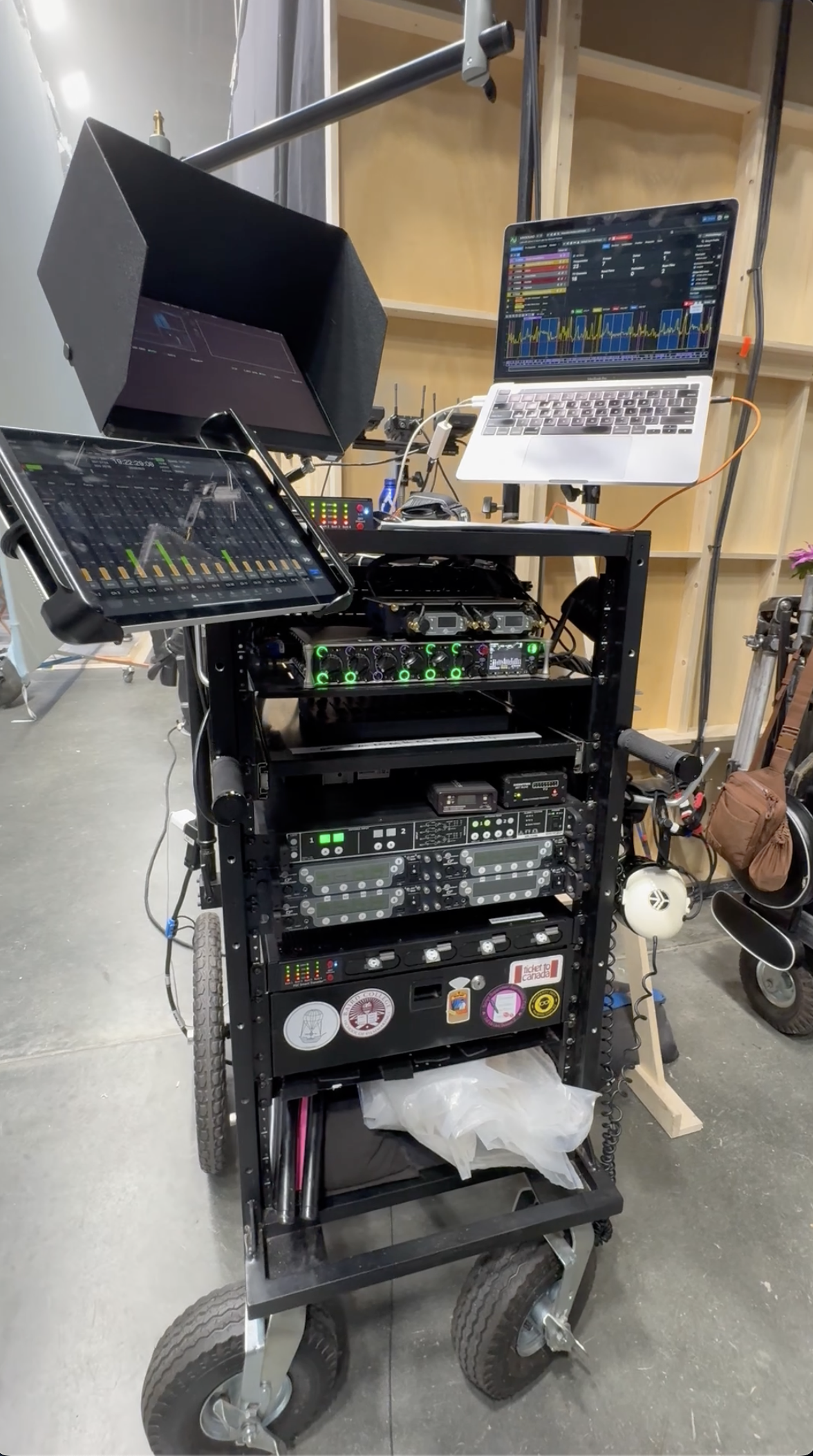
Michael Wynne CAS, production sound cart inside Stage 14 at Assembly Studios
Assembly Studios Exterior of Stage 14, Chamblee GA
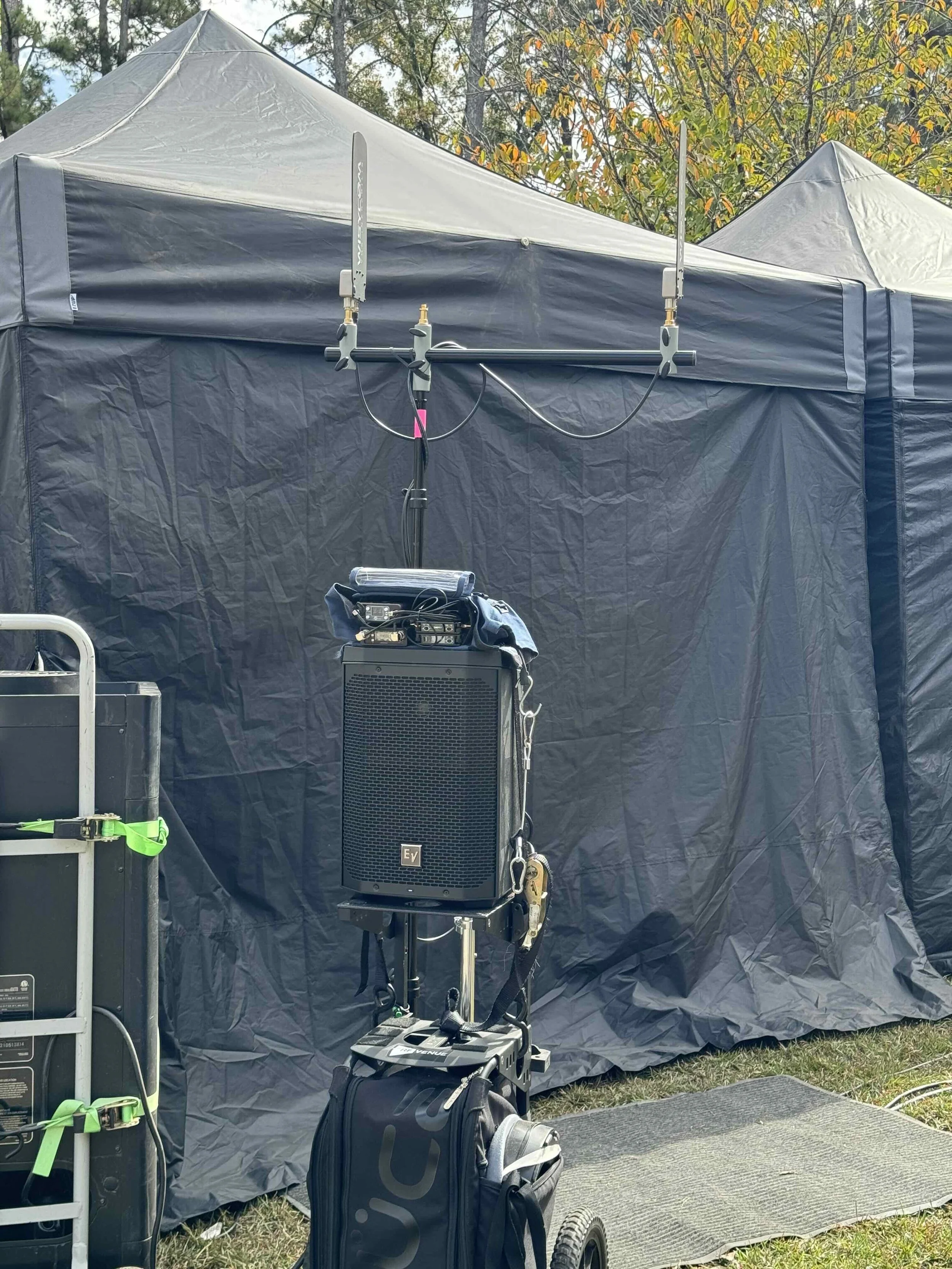
VOG with three channels, 1st AD-Director-Stunts
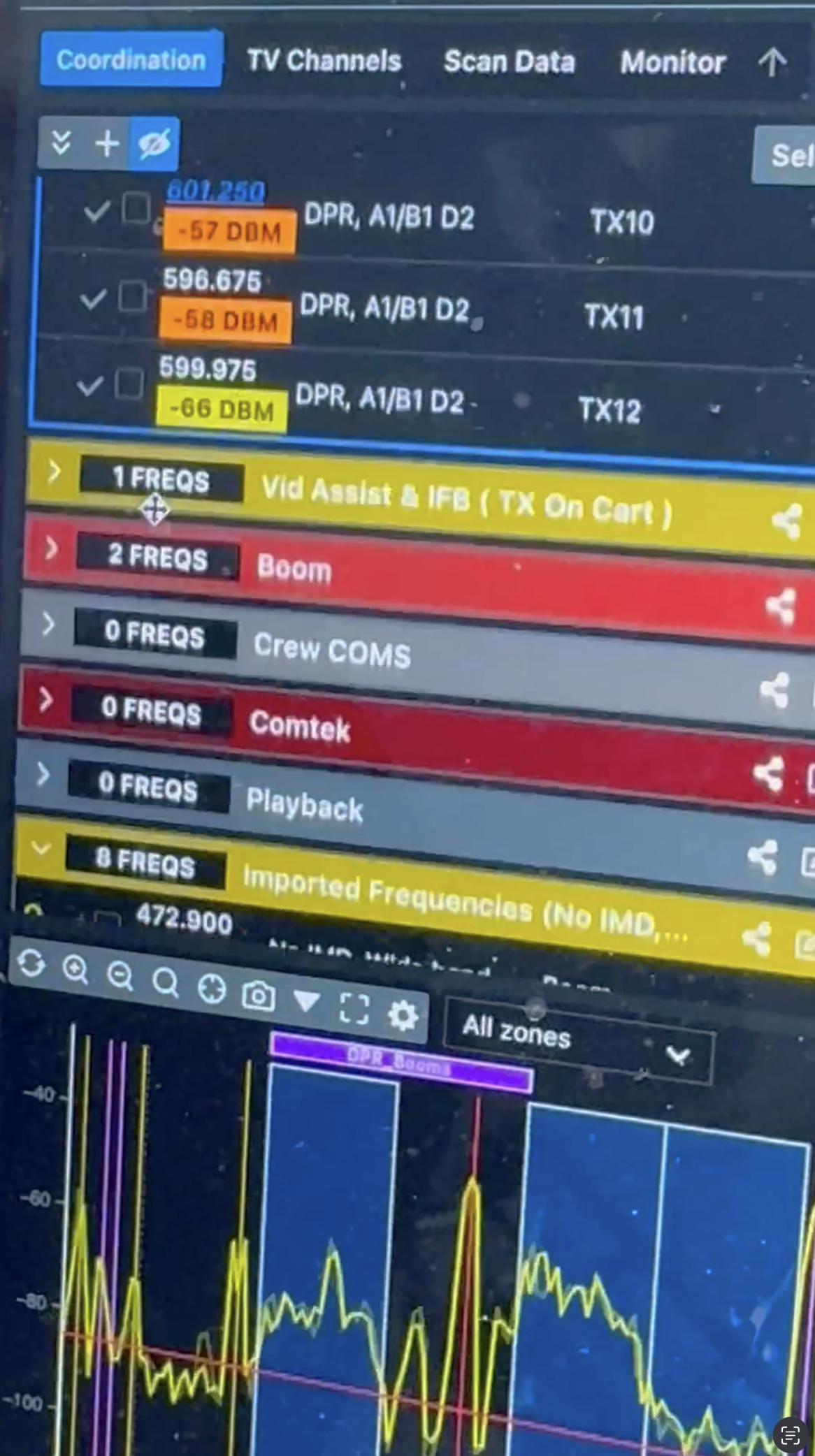
Soundbase’s Group List with realtime signal monitoring.
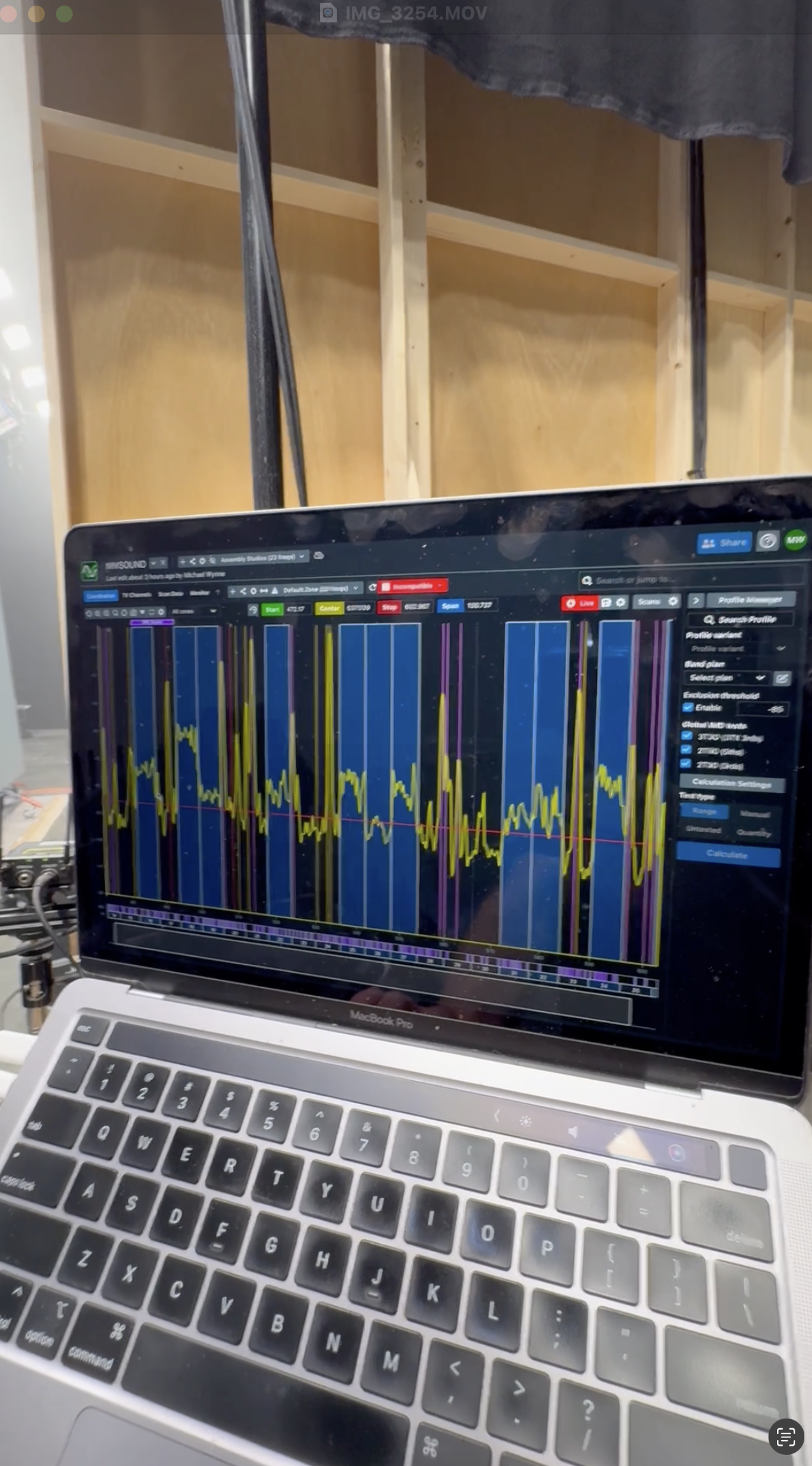
RF Plot showing real time RTSA with Tiny SA Ultra connected to Soundbase desktop version.
"In today’s film industry, managing twelve or more wireless audio channels has become the baseline. A standard day typically starts with coordinating two booms, eight talent mics, an IEM, and crew comms. On larger productions, adding VOG systems and wireless mix sends to video assist quickly pushes that count to sixteen. For example, on the Hulu series Tell Me Lies, I had large cast scenes often requiring sixteen talent mics, bringing the total count up to twenty-two and that’s without the VOG’s—a scale comparable to a high-profile concert or corporate event.
Unlike a pre RF coordinated live event, film stages & locations can be notoriously unpredictable and typically do not use RF coordinators. Sets are often saturated with RFI from high-power lighting controls in the ISM band, massive LED walls, business-band two-way radios, and wireless video transmitters. For Part 74 licensed users coordinating wireless mics, navigating the available spectrum requires powerful tools that allow precise calculations and careful planning creating the need for real time spectrum analysis tools, network hardware control and channel monitoring to ensure a successful, interference-free deployment."
"Much like a single-stage touring production, RF coordination in film falls squarely on the shoulders of the production sound mixer. When asked what wireless they use, most mixers name their 'primary' ecosystem—typically Zaxcom, Lectrosonics, Shure, Wisycom, or Sound Devices—referring to the mission-critical links for talent lavs and booms. However, this answer rarely tells the whole story. A mixer’s cart is almost always a multi-brand ecosystem including VOG’s, crew IFBs, comms, video assist feeds, and Comteks that run public mix feeds and often channels providing discreet hidden ear wigs for on screen talents. Here you’ll often find additional specialty wireless in use outside of the primary eco system from companies like Deity, Sony, Comtek, Sennheiser just to name a few. When you factor in all of this including EPK crews bringing their own gear, the RF environment can become incredibly complex.
"All of this is changing in 2026 with SoundBase. Originally developed back in 2020 and launched by Matthew Dale and Donny Kuser of Show Code. SoundBase was born out of a need for a modern, cloud-based alternative to the rigid, brand-specific coordination tools of the past. What immediately stood out was its brand-agnostic approach; every piece of wireless gear I owned was already built into its profiles. At first, I didn’t know any other film mixers using it—it seemed designed for live event coordinators—but I saw huge potential for the film world. By 2025, I had fully integrated it as my primary coordination tool, and the results were transformative.
A perfect example occurred recently on a shared stage with two units filming simultaneously. While the wall between us was acoustically treated, the electromagnetic waves could easily travel through; we were close enough that the two zones easily picked up each other's frequencies.
My unit consisted of two booms, eleven cast members, an IFB, and our Comtek channel. Because of SoundBase’s incredible flexibility, I was able to enter the other unit’s frequencies as "static" and coordinate all of my wireless channels around them. Additionally, I used SoundBase Desktop with my TinySA Ultra to monitor the coordinated channels and frequency spectrum in real time.
These are just a few of the many powerful workflow tools in SoundBase, allowing us to operate flawlessly in a space that otherwise would could have been an RF nightmare.
If you are a production sound mixer, this may be your first time hearing about SoundBase, but it is on track to quickly becoming the new industry standard for one reason: brand agnostic, 3rd party hardware control.
While users of Zaxcom, Shure, Lectrosonics, Wisycom, and Sound Devices are already familiar with the efficiency of networked control, SoundBase has taken this to the next level allowing simultaneous control of multiple hardware brands directly within a single interface on the desktop version. A must have in any production environment.
Despite being acquired by the Sennheiser Group in 2025, SoundBase has remained fiercely committed to its brand-agnostic mission. Its existing hardware integration with Shure and Wisycom—and the upcoming integrations for two other major production sound wireless brands coming early 2026—is proof of their commitment to providing production mixers with a truly universal, all-in-one coordination solution.
Upcoming Training
If you're ready to master this workflow, I will be teaching a comprehensive course on RF Coordination using SoundBase in January 22nd 2026 at IATSE Local 479. For those outside the local, stay tuned for future videos on my YouTube channel @michaelwynnecas and by subscribing to my mailing list here at mwsound.net